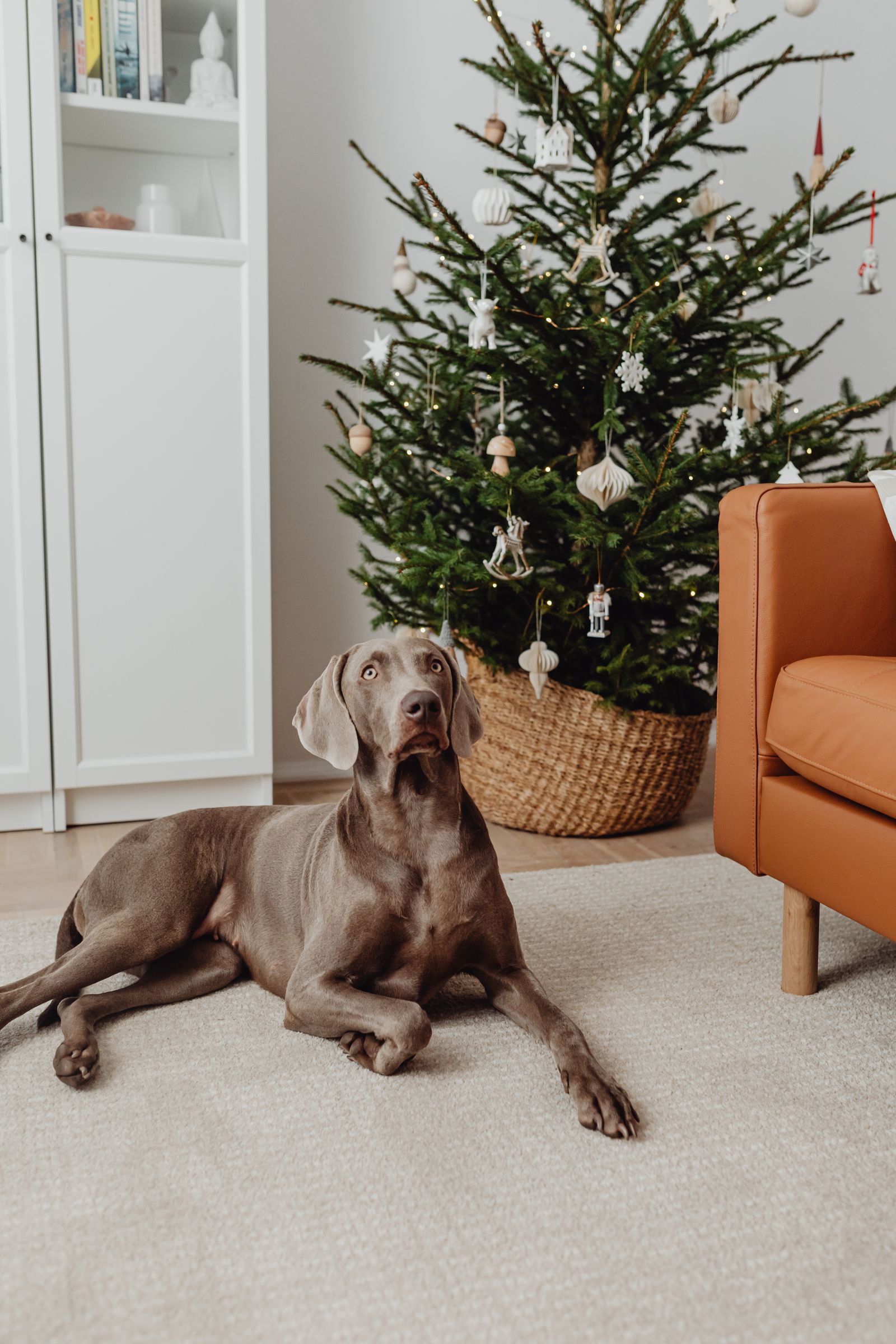
Holiday pet sitting combines ordinary care with an unusual house. Food appears on low tables, decorations move into familiar paths, guests open doors, schedules shift, and travel delays become more likely. A strong plan identifies those changes before the owner leaves and gives the sitter authority to maintain a safe, boring routine.
This checklist covers prevention and handoff. If a pet may have eaten something harmful, is injured, or becomes unwell, contact a veterinarian or animal poison-control professional promptly. Do not wait for a blog symptom list to confirm toxicity.
Start with a room-by-room holiday sweep
Walk through the spaces the pet can access from nose level, paw level, and climbing-cat level. Look for candy bowls, wrapped food gifts, ribbon, batteries, fragile ornaments, candles, electrical cords, tree water, guest medication, and trash. A closed door is useful only if every caregiver knows it must remain closed.
Move hazards rather than asking the sitter to monitor them continuously. Put food gifts in a latched cabinet, route cords behind barriers, anchor unstable decorations, and keep handbags and luggage in a pet-free room. A curious pet may behave differently when alone or when a familiar person is absent.
Make food rules simple enough for every visitor
The safest default is that guests do not feed the pets. Keep measured pet meals and approved treats labeled for the sitter. Post a short note where food is served: “Please do not give table food or leave plates unattended.” Do not make the caregiver investigate every casserole ingredient.
The ASPCA list of people foods to avoid includes chocolate, xylitol, alcohol, grapes and raisins, onions and garlic, caffeine, and raw yeast dough, among other hazards. Bones, rich scraps, fatty foods, and discarded skewers can also create emergencies. Secure garbage behind a closed door or latch, and remove it according to the care plan before it overflows.
Tell the sitter where ingredient labels and packaging can be found. If exposure is suspected, the product name, ingredient list, approximate amount, pet's weight, and time can help the veterinarian or poison expert. Do not induce vomiting unless a veterinary professional specifically directs it for that case.
Use pet-safe decoration boundaries
The AVMA's holiday guidance warns about candles, breakable ornaments, electrical cords, tinsel, plants, and food-related risks. Keep lit candles and open flames completely inaccessible and never leave them unattended. Consider flameless options, but remember that batteries can also be dangerous if chewed or swallowed.
Keep ribbon, string, tinsel, ornament hooks, and small parts out of reach; linear objects can cause serious internal injury if swallowed. Anchor the tree and protect its water. Do not assume a plant is safe because it is seasonal or labeled natural. Use a veterinarian or an authoritative toxic-plant database to check the exact species before bringing it into a pet area.
Control doors during arrivals and departures
Holiday traffic is an escape risk. Choose one entrance for guests and one person responsible for it. Move pets behind an interior barrier before a group arrives, food delivery comes, or luggage is carried out. A sign on the door can remind visitors to wait.
Provide current collar identification and confirm microchip details. Indoor cats also need a door plan. A sitter should count every pet after a gathering, not assume the hiding cat stayed upstairs.
Create a guest retreat for the pet
Some animals enjoy visitors; others need distance. Set up a familiar quiet room with bedding, water, litter for cats, and appropriate enrichment. Allow the pet to retreat voluntarily when possible. Children should not enter the space, follow a hiding cat, hug a resting dog, or take food and toys away.
Tell guests the household boundaries: no feeding, no door opening, no picking up, no unsupervised child interaction, and no introductions between visiting and resident animals. The holiday is not the time to test whether pets “will be fine together.”
Preserve the core routine
Write the nonnegotiable anchors: meal times, medication, walks or litter care, sleep arrangement, and maximum comfortable time alone. Parties and travel should fit around those anchors. If a dog normally walks before dinner, decide whether a quieter earlier route is safer than navigating evening guests or icy sidewalks.
A sitter needs exact dates and local times. Holiday words can confuse: “Come Christmas morning” is less clear than “December 25 between 7:00 and 8:00 a.m.” Put every visit, overnight window, and backup assignment on one shared schedule.
Prepare medication and health information
Keep medication in original labeled containers and provide veterinarian-approved directions, including what to do after a refused or missed dose. Store human and pet medications separately and securely; guest bags often contain pills that are unsafe for animals.
Leave the regular veterinarian, nearest open emergency hospital, poison-control number, local decision-maker, insurance details if used, and signed care authorization. Confirm holiday hours; your usual clinic may be closed or operating differently. Save the route to the emergency hospital before roads are busy.
Plan for fireworks, bells, and loud gatherings
New Year's fireworks and parties can start earlier than expected. Prepare the pet's familiar safe room, close windows and curtains, and complete outdoor breaks before peak noise when possible. Keep dogs leashed during outside trips and cats indoors. Ask the veterinarian well in advance about significant noise fear; never give unapproved medication or a human product.
The sitter should know early stress signs, preferred comfort, door rules, and when to call. For a pet with a history of panic, a short drop-in during the loudest hour may not be enough; consider extended or overnight presence if the pet and sitter are a good match.
Expect travel and weather changes
Book through the true return window and authorize extra care if a flight, road, or train is delayed. Leave more food, litter, and medication than the exact itinerary requires. Name a local backup if the sitter is sick or cannot reach the home.
Owners should confirm arrival home before the sitter ends coverage. An unlocked door and an empty water bowl are possible when each person assumes the other has taken over. Use a written handoff with the last completed meal, medication, bathroom care, and next responsibility.
Give the sitter a short emergency decision tree
If ingestion is suspected, move other pets away, preserve packaging, note the time and amount if known, and call the veterinarian or ASPCA Animal Poison Control at 888-426-4435; a consultation fee may apply. If a pet has trouble breathing, collapses, seizes, has severe bleeding, or is in immediate danger, seek emergency veterinary help.
If a decoration breaks, secure pets in another room before cleanup. If a pet escapes, notify the owner, local animal control, microchip registry, and nearby shelters promptly. The plan should list who stays with remaining pets and who searches; an open door during a frantic search can create a second escape.
Reset before the sitter leaves
At each visit, the sitter removes exposed food and trash, checks doors and barriers, confirms decorations are stable, counts pets, restores water and litter access, and reports any supply or home issue. Photos are useful, but the written facts—meals, medication, elimination, behavior, and safety—matter most.
Holiday care is easier when the home asks less of the sitter. If you would like dependable in-home coverage built around a written routine, explore Tania's pet sitting services and request a meet-and-greet well before peak travel dates.