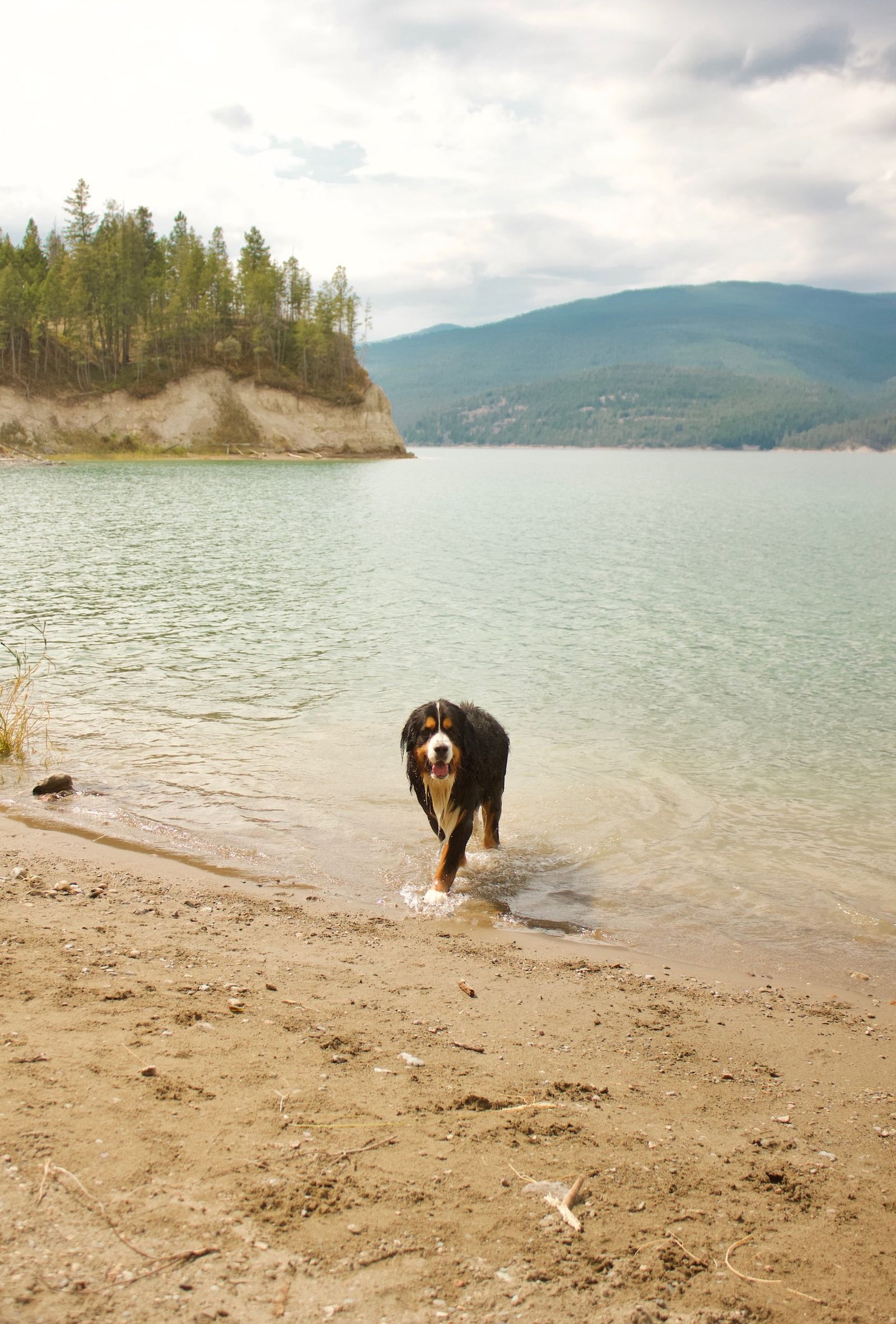
Lake Zurich allows dogs in Village parks, but only in specific places. A leash does not make every field or open lawn available. Dogs may use park pathways while leashed, and they must stay out of playgrounds, fields, courts, and open-space areas. Knowing that difference helps owners choose a legal route and protects other park users.
Water adds another concern. A lake can look inviting on a warm day, yet some surface-water conditions can be dangerous to dogs. This guide combines Village park rules with Illinois public-health guidance available on July 16, 2026.
Dogs belong on park pathways
The Village of Lake Zurich removed its general ban on pets in parks in November 2020. The current rule permits dogs on all park pathways when they are leashed.
Pets are not allowed on playgrounds, fields, courts, or open-space areas. That means a dog should remain on the pathway rather than cutting across a ball field or stretching a long leash onto a lawn. Follow signs at each park because construction, events, or facility rules may create added restrictions.
The Village page lists a $500 fine for each off-leash violation and a $250 fine for failing to clean up dog waste. Those amounts are a strong reminder that a leash and waste bags are basic parts of every outing.
Choose a leash that keeps the dog on the route
Use a leash short enough to prevent the dog from reaching restricted areas, bicycles, children, or another dog without permission. A long retractable line can cross a path before other visitors see it. Near a busy path, a standard leash and secure harness or collar offer clearer control.
Keep right where the path is shared and move aside before stopping. Do not block an entrance, bench, or narrow section. If another dog appears uncomfortable, create space rather than insisting on a greeting.
- Carry more than one waste bag.
- Keep current identification on the dog.
- Bring water from home.
- Pay attention near parking lots and road crossings.
- Use reflective gear in low light.
- Turn around if the path becomes too crowded.
A successful walk does not need to cover a long distance. Sniffing along a legal route can provide meaningful enrichment without entering open fields.
Do not assume lake water is safe
Illinois agencies warn pet owners about harmful algal blooms, also called HABs. These blooms are rapid growths of blue-green algae, or cyanobacteria. They are most common during warmer months, although they can occur in different seasons and types of water.
Potential warning signs include foam, mats, scum, paint-like streaks, unusual blue, green, or brown color, and a foul odor. It is impossible to know whether toxins are present simply by looking. Testing is needed.
Illinois EPA advises owners not to let animals touch or drink water with suspicious color, scum, foam, mats, streaks, or odor. The safest habit is to carry clean water and prevent drinking from the lake, puddles, ponds, or shoreline accumulation.
This warning does not mean Lake Zurich currently has a harmful bloom. It is general safety guidance for any walk near surface water. Check local notices and posted signs rather than assuming yesterday’s conditions are still current.
What to do after possible algae exposure
If a pet touches water that may contain a bloom, Illinois guidance says to wash the animal immediately with soap and clean water. Prevent the dog from licking wet fur during cleanup.
Possible signs of cyanotoxin exposure listed by Illinois EPA include skin irritation, low energy, drooling or foaming, appetite loss, vomiting, labored breathing, stumbling, seizures, diarrhea, and unexplained sickness. Illness can develop quickly.
Contact a veterinarian or animal poison resource immediately if exposure is suspected or symptoms appear. Do not wait for a blog, social-media post, or home remedy to confirm a poisoning. Report suspected blooms through the Illinois EPA process and follow any directions from local authorities.
Warm-weather walking near the lake
Water views and breezes can make a day feel cooler than it is. Check the actual temperature and humidity. Walk early or later when possible, use shaded routes, and shorten the outing for puppies, senior dogs, flat-faced breeds, thick-coated dogs, and dogs with health conditions.
Test pavement with your hand and choose a safer surface when it feels uncomfortably hot. Provide frequent water breaks from your own bottle. Heavy panting, weakness, confusion, vomiting, or collapse can require urgent veterinary care.
Warm months also bring ticks. After a walk near vegetation, check around the ears and eyelids, under the collar and front legs, around the tail, between the back legs, and between the toes. Ask your veterinarian about appropriate parasite prevention.
Cold-weather and ice safety
A frozen-looking lake or pond is not a walking surface for a pet. Ice thickness can vary, and a dog can reach weak ice before an owner can stop it. Keep the leash controlled and stay on the permitted pathway.
Winter salt and ice can irritate paws. Check and clean feet after the walk. Dogs with short coats, small bodies, advanced age, or medical problems may need protective clothing and shorter outings. Watch for lifting paws, shivering, slowing down, or trying to turn home.
What a practical outing kit includes
- A secure leash, collar or harness, and identification
- Fresh water and a portable bowl
- Waste bags
- A towel for wet or dirty paws
- A charged phone
- Reflective gear when daylight is limited
Leave enough room in the plan to change course. A festival, sports activity, storm, or crowded path may make a different neighborhood route the better choice.
Before you go
Park access, fines, path conditions, and water advisories can change. Check the Village Pets in Parks page, current local notices, and signs at the park before relying on older information.
Routine-based care in Lake Zurich
Most dogs benefit from regular, familiar walks more than occasional long outings. If work or travel interrupts that routine, explore dog walking or review in-home pet care in Lake Zurich. Service is confirmed only after the address, travel time, dates, availability, and care needs are reviewed.
If you would like to confirm fit and availability, request a pet-care appointment.