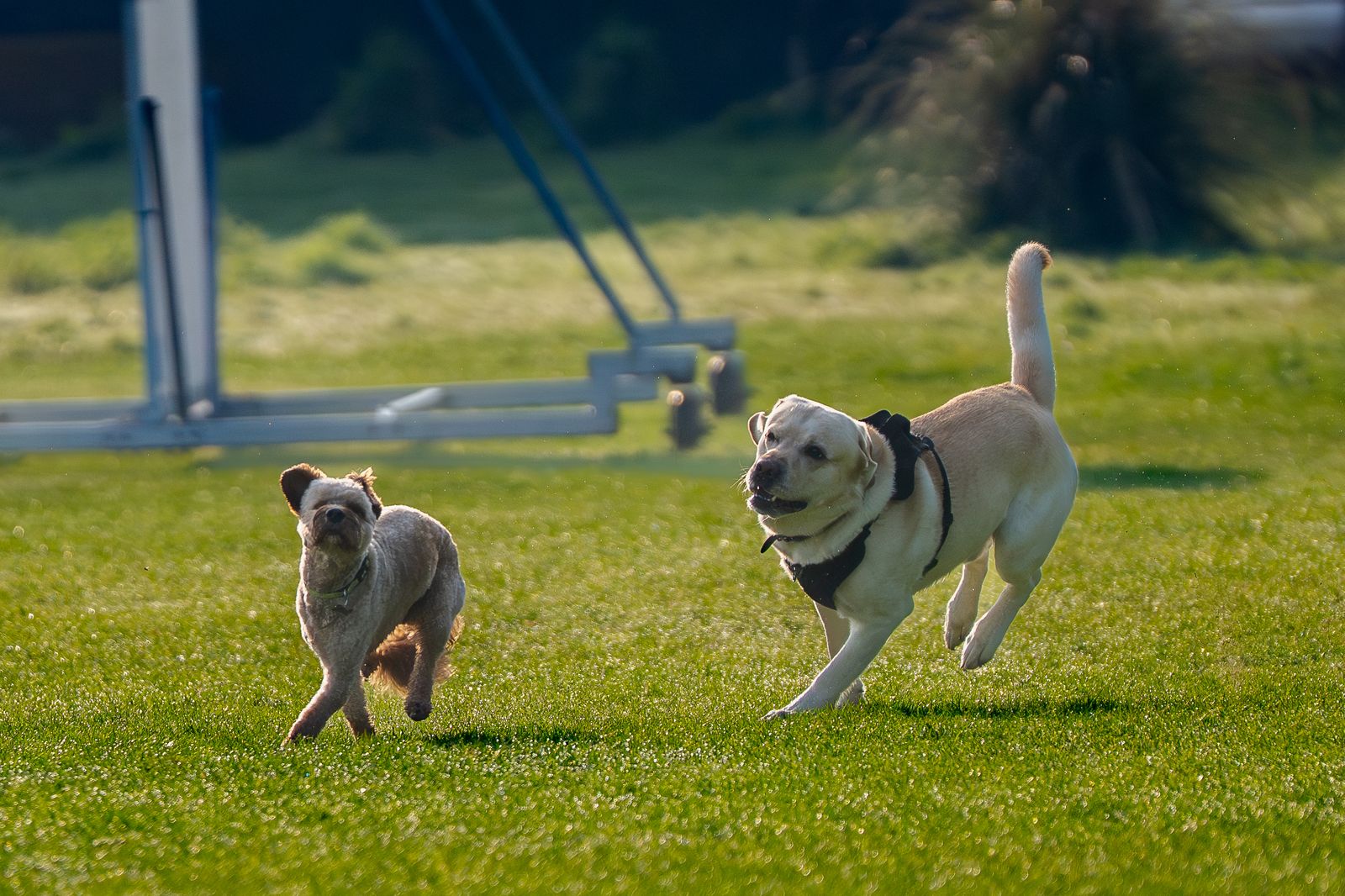
Plum Grove Reservoir gives Palatine dog owners a legal place for off-leash play, but it is not a park where you can simply arrive, open the gate, and hope for the best. The dog park has registration rules, scheduled maintenance, age limits, and separate spaces for different dog sizes. A little planning helps protect your dog and makes the visit easier for everyone sharing the space.
This guide uses information published by the Palatine Park District and was checked on July 16, 2026. It also explains how to decide whether a busy dog park is a good match for your dog in the first place.
Plum Grove Dog Park at a glance
The dog park is inside Plum Grove Reservoir on Algonquin Road, south of Harper College. The reservoir property covers 44.5 acres, while the fenced dog area covers 2.2 acres. The dog area includes a space for small dogs and a larger shared area.
- Normal hours: sunrise to sunset
- Weekly closure: Wednesdays from 7 a.m. to noon
- Small-dog area: dogs weighing 30 pounds or less
- Minimum dog age: four months
- Maximum per visit: two dogs per handler
- Handler age: at least 16
Small dogs may use the larger area, but dogs over 30 pounds may not enter the small-dog enclosure. Size is only one part of the decision. A confident 20-pound dog may enjoy the larger space, while another small dog may feel safer in the quieter enclosure.
A permit is required before entering
Only dogs registered with the Palatine Park District may use the dog park. Registration is accepted throughout the year, but it must be completed in person at Birchwood Recreation Center, Community Center, or Falcon Park Recreation Center.
The Park District requires current documentation for rabies, DA2PP, Bordetella, and an internal parasite test. As of July 2026, the listed annual price was $54 for the first in-district dog and $10 for each additional dog. The out-of-district price was $69 for the first dog and $13 for each additional dog. A household may register up to three dogs, although one handler may bring only two on a single visit.
Your dog should wear the current registration and license tags. Bring a leash into the park even after you remove it, because dogs must be leashed while entering and leaving.
How to handle a first visit
The safest first visit is usually short and quiet. Choose a time when the enclosure is not crowded. Stop outside the fence long enough to watch the dogs already inside. If play looks too rough, a gate is crowded, or your dog appears worried, take a leashed walk and try again another day.
Once inside, keep moving instead of standing at the gate. Entry areas can become tense when several dogs gather around a newcomer. Stay close enough to interrupt trouble, and maintain visual and voice contact with your dog. A phone can wait.
- Remove pinch, spike, or choke-style collars before free play if they could catch on another dog.
- Do not bring a meal, rawhide, or high-value food that could create conflict.
- Give treats only to your own dog and only when other dogs are not crowding you.
- Pick up waste promptly and fill any hole your dog digs.
- Leave at the first sign of repeated bullying, fear, or aggression.
The Park District does not allow dogs in heat or dogs showing aggressive behavior. Excessive barking is also discouraged. Leaving early is not a failed outing. It is often the most responsible choice.
Is an off-leash park right for your dog?
Some dogs love social play. Others prefer a calm sniff walk with one familiar person. A dog park may not be a good fit for a dog who guards toys, panics when approached, has unreliable recall, is recovering from illness or surgery, or becomes overwhelmed around groups.
A puppy barely over the four-month minimum may be legally old enough, but readiness also depends on vaccination status, confidence, and advice from the puppy’s veterinarian. Senior dogs and dogs with joint pain may need shorter visits and more recovery time. Never use the dog park as the first place to test whether a fearful dog likes other dogs.
For dogs that prefer personal space, a structured neighborhood walk can still provide exercise and enrichment. Letting a dog sniff, change pace, and explore a safe route can be more satisfying than forced group play.
Plan for Palatine weather
The park season runs from January through December, so conditions can change sharply. In warm weather, visit early or later in the day, carry fresh water, and watch for heavy panting, slowing down, seeking shade, or refusing to continue. Do not assume that every shared bowl is clean or that water will always be available.
During winter, shorten the visit when wind chills are harsh. Check paws for packed snow, ice, and deicing material after the outing. Dogs with short coats, small bodies, advanced age, or health problems may become cold sooner than thick-coated dogs.
Mud also matters. Wet ground can become slippery, and a muddy dog may need paws and legs cleaned before getting back into the car. Keep a towel, waste bags, a leash, and clean drinking water in your outing kit.
Before you go
Park hours, closures, fees, and health-document requirements can change. Check the official Plum Grove Reservoir page before leaving, especially after severe weather or near a registration renewal.
Keeping a Palatine dog’s routine steady
A dog park can be an occasional adventure, but most dogs benefit from a predictable daily routine. Regular potty breaks, safe movement, and familiar walking routes are often more important than one long burst of weekend exercise.
If work, appointments, or travel make that schedule difficult, learn about one-on-one dog walking or view available pet care in Palatine. Care is confirmed by address, timing, and each pet’s needs, so there is no pressure to book before the routine is reviewed.
If you would like to confirm fit and availability, request a pet-care appointment.