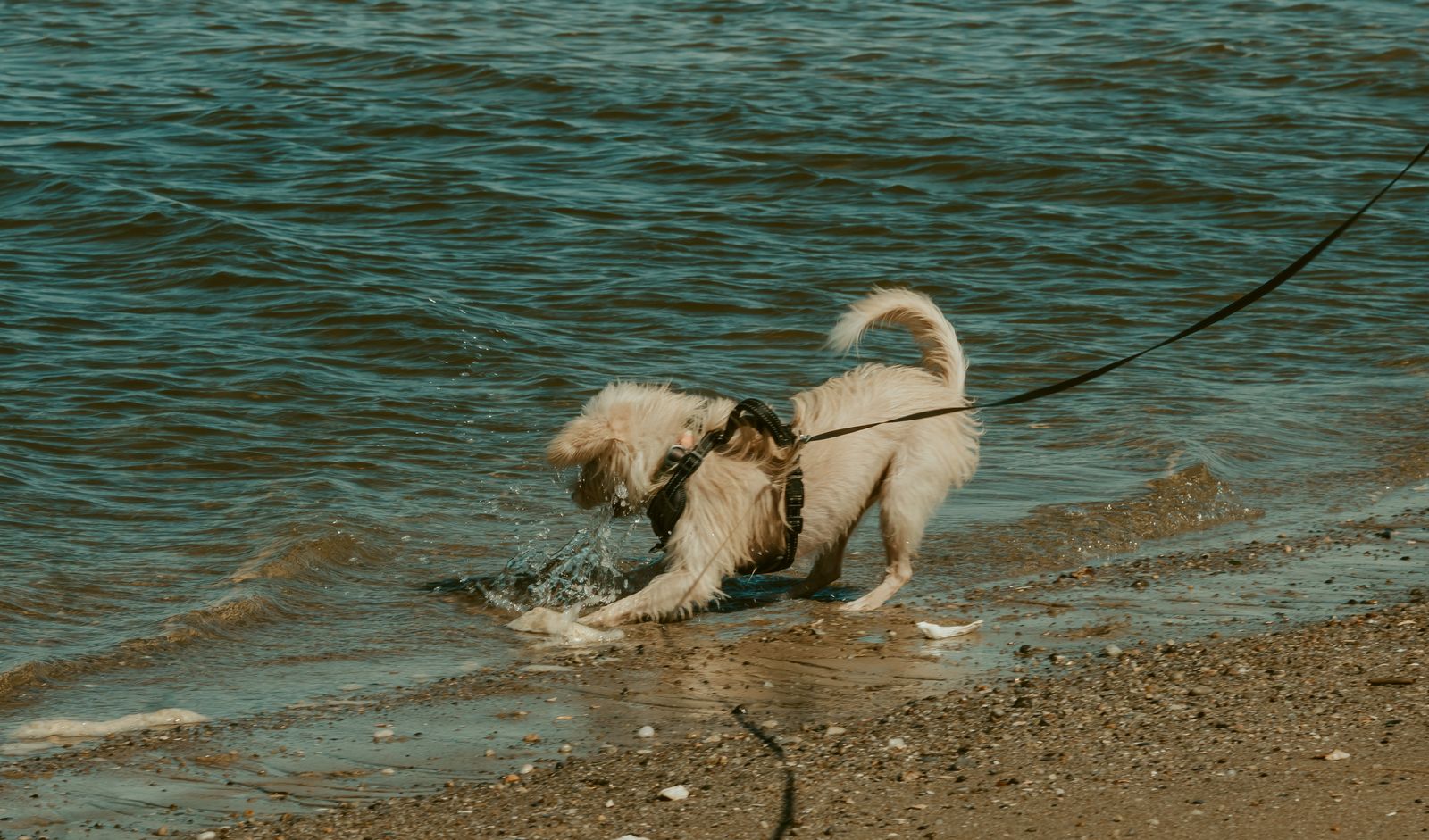
Chicago gives dogs legal off-leash space through designated Dog Friendly Areas, often called DFAs. Outside those areas, public-space leash rules still apply. A dog park fence, a beach entrance, or a familiar neighborhood does not remove the need for a current license, rabies protection, the required DFA tag, and close supervision.
This guide uses City of Chicago and Chicago Park District information checked on July 16, 2026. It focuses on the difference between ordinary park space and an official DFA, with a closer look at the Montrose Beach Dog Friendly Area.
Off leash means inside a designated DFA
The Chicago Park District describes Dog Friendly Areas as designated sections of parks or beaches where dogs may run and play off leash. These are the legal off-leash areas within the park system.
Do not use an empty field, regular beach, playground edge, natural area, or quiet park corner as an unofficial dog run. Outside a DFA, the Park District code requires a domestic animal to remain continuously restrained by a leash no longer than six feet.
The code also excludes animals from buildings, zoos, playgrounds, harbors, lagoons, swimming and spray pools, gardens, athletic fields, wildlife refuges, and other signed restricted areas. A few designated dog spaces may sit close to one of these features, so remain inside the marked boundary.
A DFA permit and tag are required
The owner or responsible person bringing a dog into a Chicago DFA must have a permit and tag issued by a participating veterinarian for that dog. The Park District’s Dog Friendly Areas page links current permit information and participating veterinary offices.
Complete the process before visiting. Keep the tag where required and bring any documentation the current rules call for. A permit supports lawful access, but it does not guarantee that every dog is social, trained, or healthy.
Chicago also requires dog registration, and licensed dogs need proof of rabies vaccination. The City offers one-year and three-year registration options. Check the City Clerk or Chicago Animal Care and Control information for current fees and instructions.
Montrose is a designated dog section, not the whole beach
The Montrose Beach Dog Friendly Area is at 601 W. Montrose Avenue, at the north end of Montrose Beach. The Park District lists it at 3.83 acres.
Keep your dog leashed while traveling through ordinary park and beach space until you are inside the designated area and current rules allow removal. General Chicago beaches do not allow dogs. The dog-friendly section is the exception, not permission to use the full shoreline.
Stay within posted boundaries and obey beach staff, signs, closures, and water restrictions. The Park District uses a flag system for swimming conditions at Chicago beaches: green indicates no swimming restriction, yellow indicates an advisory, and red indicates a swim ban. Conditions can change during the day because of weather, waves, lightning, wind, or water quality.
A flag system designed for people does not tell you everything about an individual dog’s swimming ability. When the water looks rough, a restriction is posted, or your dog is not a confident swimmer, choose dry play or leave.
Decide whether a busy beach fits your dog
Montrose can combine unfamiliar dogs, people, noise, water, sand, and open movement. That is a lot of stimulation. Dogs who are fearful, guard toys, chase obsessively, have poor recall, or become overwhelmed in groups may need a quieter activity.
Even strong swimmers can tire, swallow water, or struggle in waves. Puppies, seniors, flat-faced breeds, small dogs, and dogs with heart, joint, or breathing concerns may need a shorter outing or no swimming. Ask your veterinarian about activity limits when health is a concern.
Watch for loose, balanced play with pauses. Step in when one dog repeatedly corners, pins, mounts, or chases another dog who is trying to leave. A dog hiding behind a person, freezing, tucking the tail, or repeatedly heading for the exit is not enjoying the visit.
Prepare before entering
- Confirm the City license, rabies record, DFA permit, and tag are current.
- Use a secure collar or harness for the walk to and from the DFA.
- Bring a regular leash and keep it accessible.
- Carry clean drinking water and a bowl.
- Bring waste bags even if a dispenser is normally available.
- Leave high-value food and toys at home if they may cause conflict.
- Carry a towel and fresh water for rinsing sand or debris.
Do not let your dog drink Lake Michigan water. Bring enough fresh water to reduce the temptation. Give small amounts during breaks rather than waiting until the dog is exhausted.
Use city-walk habits around the beach
The walk from a car, transit stop, or neighborhood may include traffic, hot pavement, crowds, bicycles, broken debris, and food scraps. Keep the leash short near roads and scan the ground ahead.
Visit during a cooler, less crowded period when possible. Hot pavement and sand can hurt paws. Humidity can make exercise harder even near the lake. Heavy panting, weakness, vomiting, confusion, or collapse can be an emergency.
In cold weather, wind near the lake can make conditions feel harsher. Short-coated, small, young, senior, and medically vulnerable dogs may need shorter exposure. Dry wet fur and paws before a cold trip home.
Keep control inside the DFA
Off leash does not mean unattended. Keep the dog in sight, maintain voice control, and put the phone away. Do not allow your dog to rush the entrance or surround a dog who is trying to leave.
Pick up waste immediately. If your dog shows aggression or cannot disengage, leash and leave. Do not wait for another visitor to solve the situation.
Children and adults should ask before touching an unfamiliar dog. A beach visit can make even a normally social dog tired or protective of space.
Before you go
Permits, tags, beach conditions, closures, and facility rules can change. Check the official DFA directory, the Montrose facility page, and current beach status before leaving.
In-home support for select Chicago areas
Not every dog enjoys a crowded park or beach. A familiar neighborhood walk may be the better routine. Tania’s Pet Care offers one-on-one dog walking with limited availability in select Chicago areas. Service is never assumed citywide; the exact address, travel time, dates, availability, and care plan must be confirmed first.
If you would like to confirm fit and availability, request a pet-care appointment.