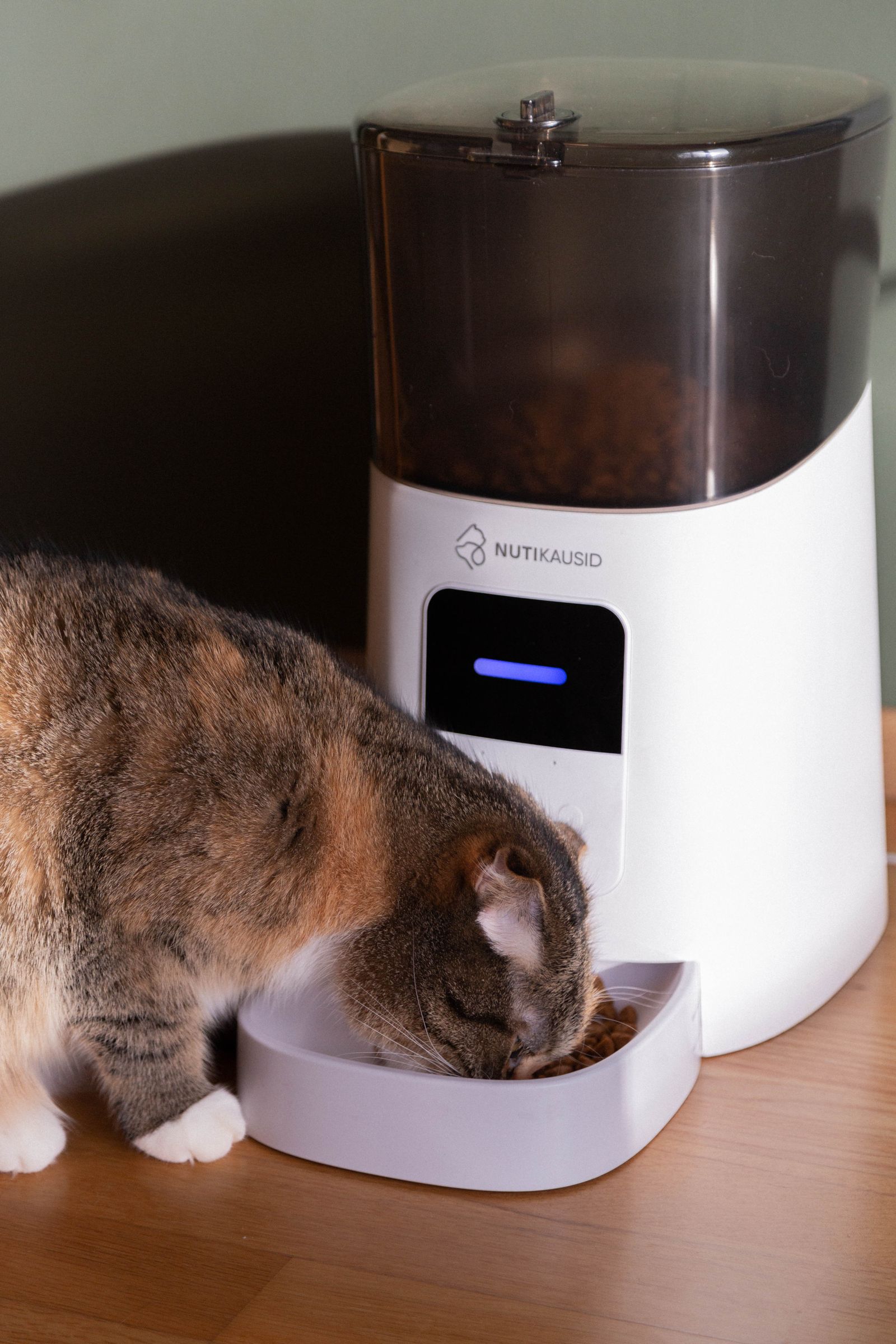
There is no responsible one-size-fits-all answer to how often a sitter should visit a cat. A healthy, confident adult who eats measured dry food and uses the litter box reliably has a different care profile from a kitten, a senior cat, a cat receiving medication, or one who stops eating when the household changes. The schedule should be built around the individual cat, not the myth that all cats are self-sufficient.
For most trips, a planned in-person check every day is a sensible minimum starting point. Many cats benefit from two visits a day or a longer block of care. Your veterinarian should guide the plan when health, recent illness, medication, appetite risk, or mobility is involved.
Why daily human observation matters
Automatic feeders, fountains, cameras, and self-cleaning litter boxes can support a care plan, but they cannot fully assess a cat. A feeder may rotate while the cat does not eat. A fountain may run while a second cat blocks access. A camera angle may miss vomit, diarrhea, a closed interior door, or a cat hiding because something is wrong.
A sitter can confirm the cat is present, compare behavior with normal, measure food intake, refresh water, inspect and scoop litter, check the home, and act if something has changed. Cats often show illness subtly, so a factual daily baseline is more useful than waiting several days for an obvious crisis.
Start with life stage and health
The AAHA/AAFP Feline Life Stage Guidelines divide cats into kitten, young adult, mature adult, and senior stages because needs change over time. Age alone does not set a sitting schedule, but it is a useful prompt.
- Kittens: Young cats may need more frequent meals, litter checks, play, and protection from household hazards. They should not be expected to manage a long gap like an independent adult.
- Healthy adults: One thorough daily visit may suit some confident adult cats for a short trip, but social, feeding, and litter needs can make twice-daily care a better fit.
- Seniors: Older cats may have medication, mobility limits, appetite changes, or a need for closer observation. Ask the veterinarian whether longer or more frequent visits are appropriate.
- Cats with medical needs: Timing should follow the veterinarian's directions, not convenience. A recent procedure or unstable condition may require veterinary boarding or clinical monitoring instead of routine sitting.
A sitter should observe and report, not diagnose. If your cat is newly unwell, confirm fitness for home care before leaving.
Match visits to meals and water
If your cat eats two measured meals, two visits can preserve that pattern and make appetite easier to track. Wet food should be handled according to your veterinarian's and manufacturer's instructions rather than left out for an open-ended period. Cats who eat too quickly, steal from another bowl, or need a prescription diet should be fed separately and watched long enough to know who consumed what.
Multiple water stations provide backup, but each should be checked and refreshed. If your cat tips bowls, unplugs a fountain, or paws objects into water, tell the sitter. A camera cannot refill an empty bowl.
Let the litter box help set the schedule
Litter care is both hygiene and information. The sitter can note urine and stool patterns, clean boxes, and spot a meaningful change from the cat's normal. The AAHA/AAFP guidance on elimination points to the importance of appropriate litter-box design and management.
A multi-cat household, a cat with a history of urinary problems, or a small number of boxes may need more frequent scooping and observation. Inability to urinate, repeated straining, crying in the box, or frequent trips with little result can be urgent, especially in male cats. Those signs require immediate veterinary contact; the sitter should not wait for the next scheduled report or try to determine the cause.
Consider medication timing
Medication can decide the visit schedule. Twice-daily doses generally call for coverage near both prescribed times. Some treatments have food, refrigeration, handling, or monitoring requirements. Obtain written directions from the prescribing veterinarian, keep the original labeled containers, and state what to do if the cat hides, refuses, spits out, or vomits a dose.
Never tell a sitter to double a later dose unless the veterinarian has explicitly instructed it. If administration requires restraint that frightens the cat or risks a bite, discuss another formulation or care setting before the trip.
Account for personality without forcing interaction
A social cat who follows people from room to room may be lonely with a single rushed visit. Two visits or a longer stay can provide play, brushing, and relaxed company. A shy cat may still need a patient sitter, but “attention” can mean sitting quietly, refreshing resources, and leaving treats at a comfortable distance rather than reaching into a hiding place.
The AAHA/AAFP environmental guidance emphasizes safe places, separated resources, play, and predictable human interaction. Preserve those choices while you are away. Do not block a normal hiding place just to make the cat visible.
Use the length of the trip as a risk multiplier
A schedule that feels adequate for one night may be too thin for ten days. Longer absences create more chances for a feeder failure, litter buildup, household issue, medication problem, or behavior change. Build in backup supplies, a local contact, and coverage if the sitter becomes ill or weather disrupts travel.
For an extended trip, consider an occasional longer visit even if the basic schedule is once daily. That gives the sitter time to observe the cat after routine tasks instead of seeing only arrival behavior. Some cats do not emerge until the home is quiet again.
A practical decision guide
Consider one thorough visit each day for a short absence when a healthy adult cat is comfortable alone, has no time-sensitive medication, eats in a way that can be accurately monitored, and has adequate litter and water resources.
Consider two visits each day for kittens, many seniors, cats eating two fresh meals, medication on a twice-daily schedule, cats who need more litter observation, or highly social cats.
Consider longer visits, overnight care, or veterinary care when a cat needs sustained companionship, close post-procedure observation, complicated treatment, or monitoring beyond a pet sitter's nonclinical role.
These are planning categories, not medical rules. Ask your veterinarian to approve the schedule for any cat with health concerns.
Make each visit substantial
Frequency means little if the visit does not cover the basics. A complete cat visit should include a secure entry and cat count; a visual behavior check; measured food and appetite notes; fresh water; litter scooping and observations; medication if agreed; calm enrichment; cleanup; and a report. The sitter should also verify doors, windows, temperature, and any home condition that affects the cat.
Test the plan before departure
Schedule a meet-and-greet and show the sitter where the cat actually hides, how the feeder works, which litter output is normal, and how doors are controlled. If possible, try the planned visit rhythm while you are nearby. A rehearsal may reveal that the cat needs more time to emerge or that the medication routine cannot fit safely into a brief visit.
If you want help choosing coverage, Tania's cat sitting visits can be planned around your cat's real routine. You can request an appointment to talk through frequency without committing to more care than the cat needs.