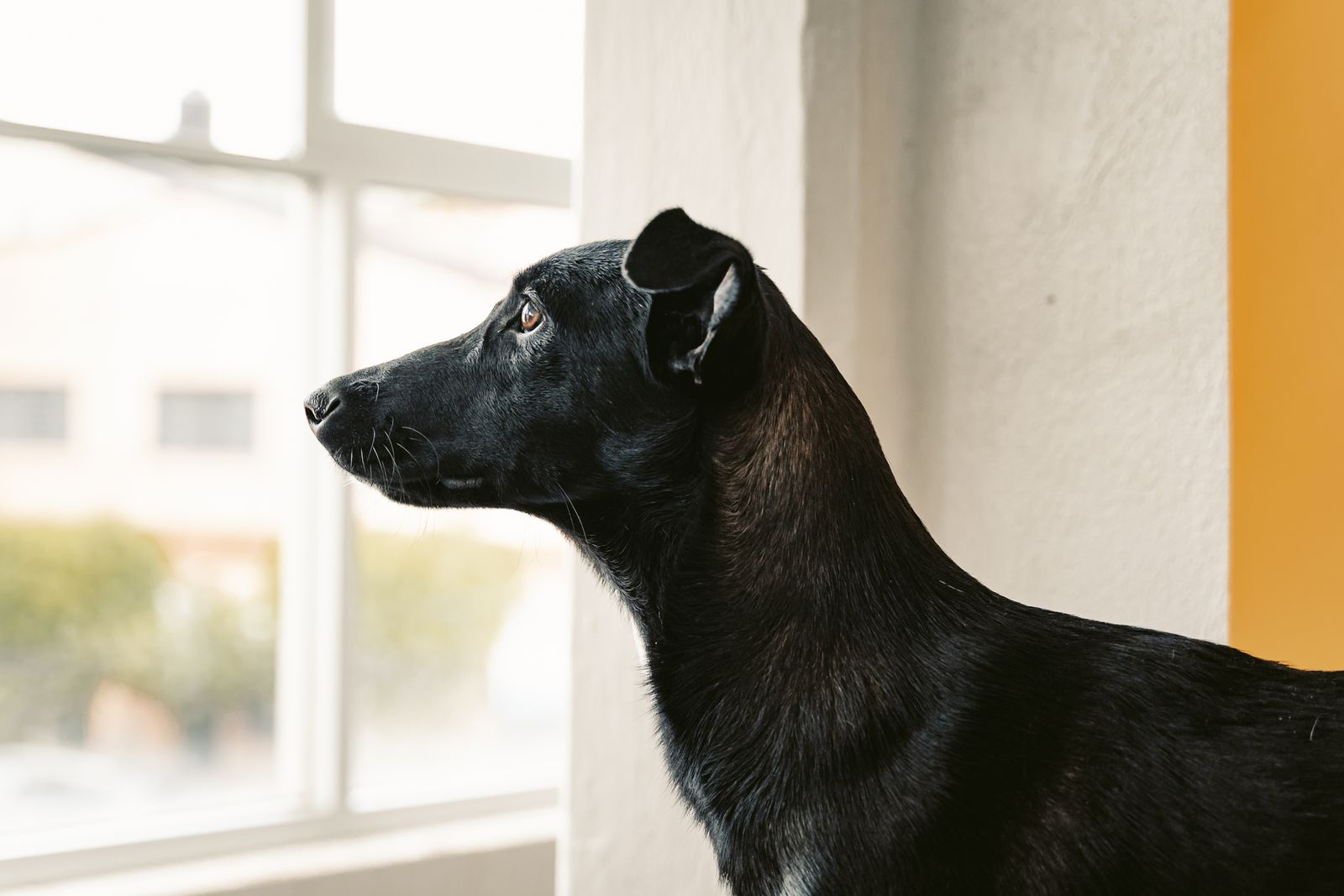
A dog with separation anxiety is not simply bored or disappointed that an owner left. The dog may experience intense distress when separated from an attachment figure. Travel can magnify the problem because departure cues, household routines and the length of absence all change at once.
Separation anxiety is a health and behavior concern that deserves veterinary guidance. An in-home sitter can reduce environmental disruption and provide company during agreed hours, but a sitter is not a cure and ordinary overnight care is not continuous supervision.
Know the signs that suggest more than boredom
Possible signs include vocalizing, destruction near exits, house soiling, pacing, panting, drooling, refusing food, vomiting, attempts to escape or inability to settle when the owner is gone. Some dogs injure themselves trying to leave a crate or room.
These signs can have other medical or behavioral causes. Record when they happen and share video with the veterinarian if it can be collected safely. Do not deliberately leave the dog in severe distress to obtain footage.
Start with the veterinarian, not the packing list
Schedule the conversation well before travel. The veterinarian may assess medical contributors, discuss a behavior plan or refer the family to a veterinary behaviorist. Treatment can involve gradual behavior work, environmental management and, in some cases, prescribed medication.
Never try a new medication for the first time as the owner is walking out the door. Use it only as prescribed and ask the veterinarian how far in advance it should be trialed, what side effects to watch for and what the sitter should do after a missed dose.
Measure how much alone time the care plan contains
Overnight pet sitting can mean an evening-to-morning period, not twenty-four-hour presence. Drop-in visits leave gaps between appointments. Ask each provider for exact arrival windows, departure times and backup arrangements.
Compare those gaps with the dog's current ability to remain alone without panic. If the dog cannot safely be alone for the planned intervals, choose a higher level of care or work with the veterinary team on another arrangement. Do not assume the dog will eventually tire out.
Introduce the sitter gradually
A stranger arriving after the owner disappears can add stress. Arrange meetings while the owner is home. Let the dog approach at a comfortable pace, and avoid forced petting or cornering. The sitter can join a familiar walk, give approved treats or participate in a calm routine.
When the dog is comfortable, practice a brief owner absence while the sitter remains. Increase difficulty only within the veterinarian or behavior professional's plan. If panic begins, the exercise was too hard; shortening the next step is not failure.
Keep important routines recognizable
Use the same food, bowls, walking equipment, sleeping location and familiar cues. Avoid changing diet, rearranging the house or starting a new crate routine immediately before travel. Leave bedding and safe items the dog already uses rather than purchasing an unfamiliar collection of calming products.
Write down:
- Meal, bathroom, walk and sleep schedule
- Departure triggers and earliest distress signals
- Approved ways to create distance or calm the environment
- Unsafe confinement methods for this dog
- Medication instructions in the original labeled container
- Veterinarian and emergency contacts
- Exactly how long the dog can be left within the current plan
Make departures and arrivals calm
Emotional goodbyes can add intensity for some dogs, but ignoring a frightened dog is not a complete treatment plan. Follow the strategy developed with the veterinary professional. The sitter should use calm, predictable entry and exit routines and should not punish damage or accidents.
Ask the sitter to report behavior factually. Useful notes include how soon distress began, whether the dog ate, what happened near exits, how long recovery took and whether any new sign appeared.
Prepare the home for escape prevention
Check doors, windows, gates, screens, crates and harnesses. A panicking dog may exploit a weakness that is irrelevant on normal days. Identification and microchip contact information should be current.
If the dog damages a crate, bends bars, breaks teeth or claws, or panics when confined, do not ask the sitter to repeat that setup. AAHA guidance notes that dogs who panic in crates may need another safe arrangement. The veterinarian or behavior specialist should help determine it.
Define the escalation plan
The sitter needs permission to act when the dog cannot settle or may be injured. List the owner, local backup person, veterinarian and emergency hospital. Explain when the sitter should call immediately and who can authorize veterinary care.
Concerning signs include injury, repeated vomiting, collapse, breathing difficulty, ingestion of a dangerous item or frantic escape behavior. Emergencies require prompt professional help, not a wait-and-see message thread.
Plan the return home too
After travel, return to the usual schedule gradually. Review the sitter's notes and share new or worsening signs with the veterinarian. A difficult stay is information that the treatment and care plan needs adjustment; it is not evidence that the dog was spiteful.
Choose care based on the dog's real needs
Remaining in a familiar home can help reduce change, but the amount of supervision still has to fit the dog. Be honest about symptoms and bite, escape or confinement history before a caregiver accepts the booking.
If your veterinary plan supports in-home care, learn about Tania's in-home dog sitting. A meet-and-greet can clarify covered hours, routines and whether the service is an appropriate match. If you would like to discuss fit and availability, request an appointment.